A team from the Würzburg Institute of Experimental Biomedicine I and the Rudolf Virchow Center (RVZ) has fundamentally changed our understanding of platelet biology with a study published in the journal Science.
more

A team from the Würzburg Institute of Experimental Biomedicine I and the Rudolf Virchow Center (RVZ) has fundamentally changed our understanding of platelet biology with a study published in the journal Science.
more
Five professors from the University of Würzburg are among the Highly Cited Researchers 2025. This list includes researchers whose work is cited particularly often by other scientists.
more
Dr. Hariharan Moorthy is investigating a special form of cell death that could enable innovative cancer therapies. An Alexander von Humboldt Fellowship allows him to conduct his research at the University of Würzburg.
more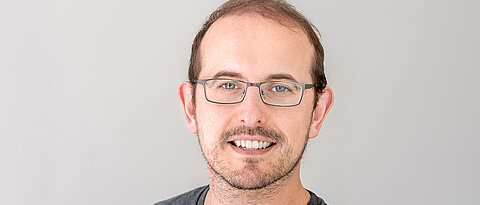
A new strategy for treating a specific form of lung cancer: That is the goal of a research project led by José Pedro Friedmann Angeli. Financial support for the project is provided by the European Research Council.
more
The University of Würzburg has secured funding for two Clusters of Excellence under the Excellence Strategy. This also means that it is now eligible to apply for University of Excellence status.
more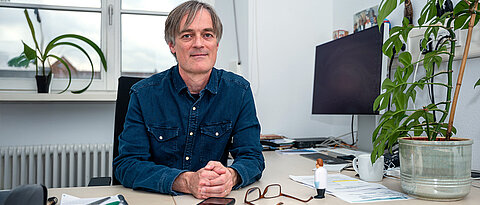
Christophe Zimmer is the new “Spitzenprofessor” at the University of Würzburg. As a luminary in the field of biological imaging and processing, he will receive up to five million euros in funding from Hightech Agenda Bayern.
more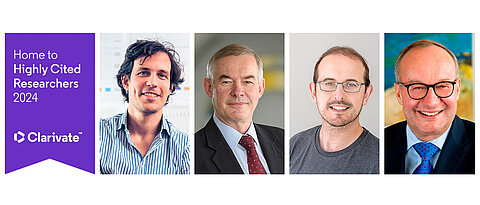
Once again, several researchers from the University of Würzburg are among the “Highly Cited Researchers”. In 2024, four professors make the list. Their work is frequently cited by colleagues worldwide.
more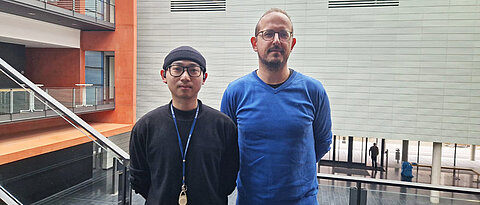
A recent study from the University of Würzburg unveiled a key enzyme involved in producing selenoproteins, opening new strategies for treating certain types of cancer in children.
more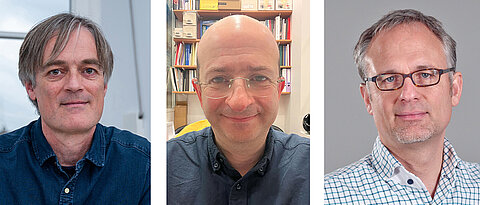
Professors Ivo Boneca, Mark Brönstrup, and Christophe Zimmer have been awarded one of the most prestigious European research prizes, an ERC Synergy Grant worth eleven million euros.
more
The competition for the multi-million euro federal and state funding programme is entering its final phase. JMU has submitted two proposals and the results of the evaluation will be available in May 2025.
more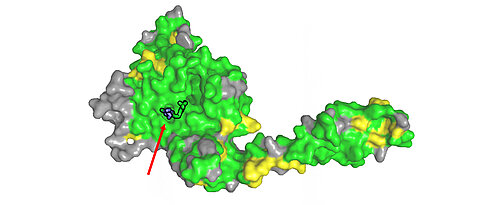
Some cancer drugs cause severe side effects because they are not working accurately enough. A team at the University of Würzburg led by biochemist Caroline Kisker has now discovered why.
more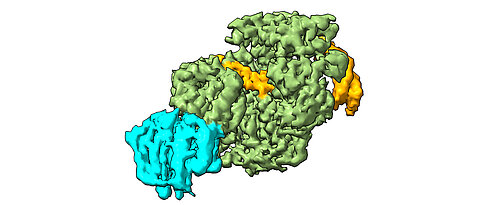
Researchers at the University of Würzburg, led by Caroline Kisker in cooperation with Claudia Höbartner, discovered how the protein XPD detects a severe DNA damage and controls its repair.
more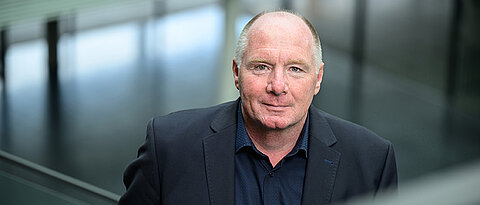
Professor Bernhard Nieswandt is investigating a cellular mechanism in blood platelets that appears to play a crucial role in inflammatory diseases. He has been awarded an ERC Advanced Grant for his work.
more
One step further: One JMU research project on nucleic acid research and technologies has qualified for the next round in the competition for the prestigious research grant.
more
A precursor of cholesterol, previously categorised as harmful, can protect cancer cells from cell death. This finding, published in Nature, opens new doors for cancer research.
more