![[Translate to Englisch:] Nobelpreis Röntgen Ausschnitt](/fileadmin/_processed_/8/4/csm_Nobelpreis_Ausschnitt_cbf91ddcc5.jpg)
Röntgen Medal
Röntgen Medal of the University of Würzburg
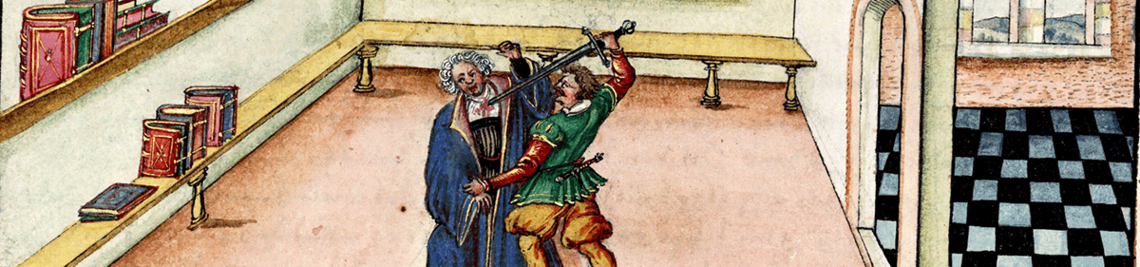
The Röntgen Medal of the University of Würzburg is a sponsorship and science prize. It was awarded for the first time in summer 2009 as a sponsorship prize as part of the Foundation Festival. Since 2012, the Röntgen Medal has also been awarded as a science prize.
The images used are generally protected by copyright.
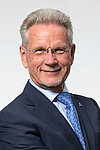
Manfred Wittenstein (2024)
E.h. Manfred Wittenstein made the WITTENSTEIN SE Group, headquartered in Igersheim (Main-Tauber district), one of the most important drivers of innovation in the field of mechatronic and cybertronic drive technology. It has long been one of JMU's most generous sponsors. His patronage reached a peak in 2023 with the DynaMINT research project made possible by the Wittenstein Foundation. The foundation is funding the project, which is coordinated by the university's MIND Centre, with around one million euros. It accompanies children and young people over several years in order to analyse their educational and career decisions and to research how extracurricular educational opportunities can influence the image of STEM professions among pupils.

Georg Nagel (2024)
Georg Nagel joined JMU in 2004 and held a professorship in Molecular Plant Physiology until 2021. He has been a senior professor at the Institute of Physiology since 2021. He researches membrane transport and its molecular players in plants and humans; he also investigates artificially produced light receptors and their optogenetic application. Based on his work, for which he has received prestigious awards, applications are being developed that aim to restore lost vision and treat Parkinson's disease, among other things.
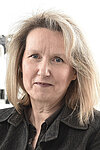
Anna-Leena Sirén (2024)
Anna-Leena Sirén was a University Professor of Experimental Neurosurgery at JMU from 2004 to 2021; she has been a Senior Professor at the Institute of Physiology since 2021. Her research focuses on the mechanisms of nerve regeneration after brain injury. Together with a team from the Max Planck Institute for Experimental Medicine, she succeeded in developing the world's first successful neuroprotective treatment for stroke patients. She has received numerous awards for her pioneering work.
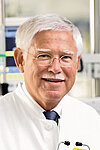
Prof Dr Christian P. Speer (2023)
After studying human medicine in Göttingen, Christian P. Speer completed his doctorate and began his specialist training at the University Children's Hospital Göttingen in 1977. In 1986, he was appointed clinical senior physician there and habilitated in the same year. Initially appointed as a temporary university professor of paediatrics, he held a professorship for life from 1994 and was appointed Medical Director of the Department of Neonatology at the University Children's Hospital in Tübingen. On 1 May 1999, he accepted a call to Würzburg and held the Chair of Paediatrics until 2020. He still works at the Faculty of Medicine today. Thanks to his extensive expertise in the field of paediatrics, he made a decisive contribution to the further development of the various specialist areas of the paediatric clinic and implemented groundbreaking structural changes. His fundamental work in the field of neonatal medicine has led to a massive improvement in the chances of survival for premature babies over the last few decades. As an outstanding scientist, Speer is an active and sought-after member of numerous committees and professional societies worldwide. Thanks to his profound expertise, he has also significantly shaped the development of the University Hospital of Würzburg as a member of the Supervisory Board and the Faculty of Medicine as an outstanding university lecturer.

Prof Dr Helmuth Schulze-Fielitz (2022)
In 1994, he declined an appointment to the University of Marburg and accepted the Chair of Public Law, Environmental Law and Administrative Sciences at the Julius-Maximilians-Universität Würzburg, which he held until 2012. As Vice Dean, Dean and Dean of Studies, Helmuth Schulze-Fielitz played a decisive role in shaping the development of the Faculty of Law. His involvement in the Association of German Constitutional Law Professors, of which he was Chairman in 2008 and 2009, helped the faculty achieve nationwide representation. In addition to his contribution to raising the profile of his subject, Helmuth Schulze-Fielitz was and is particularly committed to the university as a whole. He is one of the founding members of the Würzburg Scientific Society, a founding member and Chairman of the Board of Trustees of the "Environmental Energy Law Foundation" and was the first Chairman of the Standing Commission for the Investigation of Scientific Misconduct for many years. Helmuth Schulze-Fielitz has rendered great services to JMU not only as a scientist and networker, but also as a generous benefactor.

Prof Dr Horst Dreier (2021)
After several years as a professor in Heidelberg and Hamburg, he was called to Würzburg, where he worked as a professor of philosophy of law, constitutional and administrative law and dean of the Faculty of Law. He was very active in publishing highly regarded writings and series on legal topics and was active at the Wissenschaftskolleg zu Berlin, at the "Max Weber-Kolleg für kultur- und sozialwissenschaftliche Studien" in Erfurt and at the "Carl Friedrich von Siemens Stiftung" in Munich. He made a name for himself as a liaison lecturer for the German National Academic Foundation, an expert reviewer for "Philosophy of Law and State" for the German Research Foundation (DFG) and a member of the scientific board of trustees of the Research Centre of the Protestant Study Community (FEST) and was a member of the National Ethics Council of the Federal Republic of Germany. In addition, he shaped his discipline and its public voice through a number of other positions and offices and was nominated as a judge at the Federal Constitutional Court. Horst Dreier's academic work demonstrates an outstanding national and international knowledge of the constitutional history and history of ideas of public law, which is why he has been honoured with numerous awards.

Jörg Hacker (2019)
Jörg Hacker is a pioneer of molecular infection research. His scientific work is inextricably linked to the concept of pathogenicity islands in microorganisms, which he developed together with Werner Goebel. Originally discovered in Escherichia coli, it soon became apparent that pathogenicity islands are widespread in bacteria.
Jörg Hacker's scientific work was not only to characterise molecular pathogenicity research in Germany, it also earned him international recognition. In 2000 and 2005, research visits took him to the Institute Pasteur in Paris. In 2006, he was a visiting professor at Tel Aviv University in Israel.
He has received honorary doctorates from the Universities of Umeå in Sweden, Pecs in Hungary, Hyderabad and Delhi in India, Tel Aviv in Israel and the Russian Academy of Sciences. He has also received numerous honours and awards, including the Cross of the Order of Merit of the Federal Republic of Germany in 2009 and the Bavarian Maximilian Order for Science and Art in 2012.
A key characteristic of Jörg Hacker is his ability to have an integrative effect and to bring people from different disciplines into dialogue with one another. His respectful manner and his wide-ranging interest in culture, literature, history and politics help him to inspire his counterparts with enthusiasm for scientific and politically relevant topics.
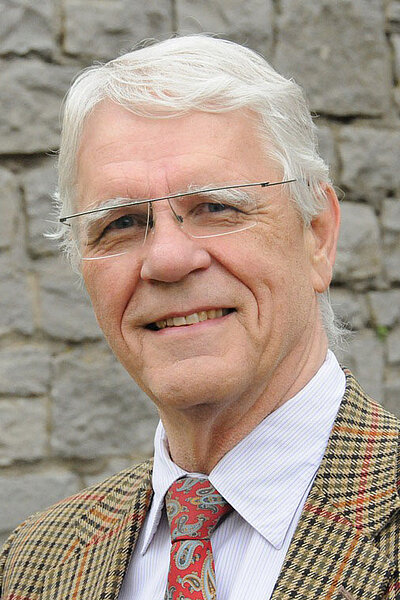
Herbert Wellhöfer (2017)
In 1975, he joined Wellhöfer Treppen GmbH & Co. KG Würzburg, which was founded by his father Erich Wellhöfer in 1951, and subsequently steered the fortunes of the steadily growing company for many years, which has long been recognised as a leading German supplier of loft ladders, space-saving staircases and kneehole doors.
Wellhöfer always remained connected to his hometown of Würzburg as a friend and supporter and in 2016 donated a valuable collection of almost 400 ancient Greek coins to the Martin von Wagner Museum, which he had amassed over many years.
Geographically, the collection covers an area stretching from what was then Bactria (northern Afghanistan) to the east coast of the Iberian Peninsula, and the chronological spectrum ranges from the beginnings of coinage in the 6th century BC to the late Hellenistic period.
In addition to the significant donation, Wellhöfer supported the antiquities collection with a generous donation for the museum and scientific cataloguing, as well as an adequate presentation of the collection.
With a further donation, Wellhöfer financed new lighting for the museum's picture gallery and thus laid the foundations for a comprehensive renovation, which was completed with the opening of the major Julius Echter exhibition in June 2017.

Traute Schröder-Kurth (2017)
After training as an MTA at the Lette-Haus in Berlin, she studied medicine in Hamburg and, after passing her state examination, moved to the Institute of Human Genetics in Heidelberg, where she gained her doctorate and habilitated in human genetics in 1971. In Heidelberg, she established one of the first diagnostic cytogenetics laboratories in Germany and was appointed professor in 1975. Schröder-Kurth was the first scientist in the world to carry out chromosome analyses on patients with Fanconi anaemia.
As a founding member of the European Fanconi anaemia research organisation, she was instrumental in the creation of a Fanconi anaemia register and dedicated her life to successfully researching various aspects of Fanconi anaemia.
Another focus of her research work is the critical monitoring of the increase in medical ethics problems caused by advances in genetics, which she addresses in various ethics committees.
In 1995, Mrs Schröder-Kurth moved to the Würzburg Institute of Human Genetics at the Biocentre as a visiting professor, where she headed the third-party funded project "Ethical Issues in Human Genetics".
In 1997, together with her husband Hans-Joachim Kurth, she set up the "Schroeder-Kurt Fund" to provide a reliable financial basis for Fanconi anaemia research in Würzburg. In 2007, she topped up this fund on a large scale to enable ongoing research.

Gabriele Nelkenstock (2017)
The social education worker and former entrepreneur in the fashion industry is the first chairwoman of the association "Hilfe im Kampf gegen Krebs e.V.", which she founded and which has been financing, supporting and realising projects at the university hospital for over 25 years.
With great commitment and a wealth of ideas, Mrs Nelkenstock always succeeds in launching new campaigns with which she arouses the enthusiasm of the public and the interest of sponsors. With charity concerts, relay marathons, handball tournaments, appeals for donations, charity days and many other projects, she supports efforts in the fight against cancer, making life easier for patients and their families.
It not only supports the fight against acute illnesses, but also cancer research itself, such as the construction of one of the most modern stem cell therapy centres in Germany, located at the UKW, with the "Stem Cell Therapy Campaign".
The association also supports the application of modern therapies in clinical research and the promotion of young scientists with doctoral scholarships.
The crowdfunding campaign "Your immune system becomes your weapon against cancer" (2016), with donations totalling over one million euros, was certainly one of the particularly ambitious projects.

Baldwin Knauf (2017)
As Chairman of the Knauf Group's Shareholders' Committee, he has been associated with Alma Julia for many years. A member of the University Council since 2013, he supports the university management with extraordinary commitment and expertise. With generous donations, he supports a wide range of activities at the alma mater, including a large number of projects and events, including the "No Limits!" sports festival for people with and without disabilities.
Knauf also supports outstanding students as part of the Deutschlandstipendium scholarship programme (since 2011) and is involved in promoting young talent as a partner and sponsor of the "study & stay" job fair.
It actively supports several pioneering projects in infection and cancer research and also organises the annual "Fascination of Research" symposium for the JMU.

Prof Dr Dieter Kuhn (2016)
Kuhn initiated a systematic modernisation of the sinology curriculum when he accepted the Chair of Philology of the Far East at the University of Würzburg in 1988. The "Modern China" degree programme (since 2002) underlines the pioneering role of Würzburg Sinology. Thanks to the successful cooperation with the Faculty of Management and Economics, the Institute has been adapted to modern requirements. The intensive contact and exchange in research and teaching with Chinese universities can also be attributed to Kuhn's commitment. Through his tireless commitment, Kuhn helped Würzburg Sinology achieve worldwide recognition until his retirement in 2011.

Prof Dr Heisenberg (2015)
In 1975, at the age of just 35, he took over the Chair of Neurobiology and Genetics at the Julius-Maximilians-Universität Würzburg, which he held for almost 35 years until his retirement. Since 2010, he has held a senior professorship at the Rudolf Virchow Centre. He is one of the world's leading neurobiologists and geneticists and is the founder of neurogenetics in Germany.

Prof Dr Helmut Pfotenhauer (2014)
In 1987, he was appointed to the Chair of Modern German Literature I in Würzburg, which he held until 2011. His research specialisms include the literature, poetics and aesthetics of the 18th to 20th centuries, literary anthropology, art literature, intermediality and edition philology. As editor of the yearbook of the Jean Paul Society and in his function as its president, he founded the Jean Paul Edition Centre at the Julius Maximilian University of Würzburg in 2004.
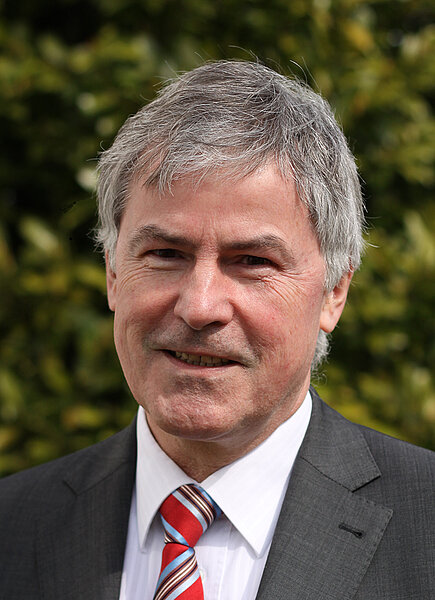
Prof Dr Gernot Wilhelm (2013)
Professor of Oriental Philology (renamed "Ancient Oriental Studies" in 2003) at the University of Würzburg since 1988. Since 1988 Wilhelm has been editor of the Hittitology section of the Reallexikon für Assyriologie, and from 1994 to 2005 he also edited the Zeitschrift für Assyriologie. In 2001, he became chairman of the Commission for the Ancient Near East at the Academy of Sciences and Literature in Mainz and head of the "Hittite Studies" project, which is analysing the excavations in Hattusha.

Prof Dr Bert Hölldobler (2012)
The expert in the sociobiology of insects has produced groundbreaking work, particularly on the social behaviour and ethoecology of ants. In 1969, Hölldobler went to Harvard University in the USA. Together with his colleague there, Edward O. Wilson, he wrote the reference book "The Ants", which was awarded the Pulitzer Prize in 1991. He returned to the University of Würzburg in 1989 and held the Chair of Zoology II - Behavioural Physiology and Sociobiology here until 2004.
Dipl.-Ing. Dr Herbert Brause (2010)
Since 1976, Herbert Brause has been committed to the teaching of technical content and the establishment of a media library for research and teaching in teacher training. In 1986, he set up a foundation which, among other things, financed the construction of the new Centre for Languages and Media Didactics at Hubland and also supported the expansion of state-of-the-art video technology at the University Hospital.

Dr Kurt Eckernkamp (2010)
In 2000, Kurt Eckernkamp and his wife Nina Eckernkamp-Vogel founded the Vogel Foundation, which focuses on promoting education, science, medicine and culture. For example, this foundation supports dementia research at the University of Würzburg in a five-year research project.
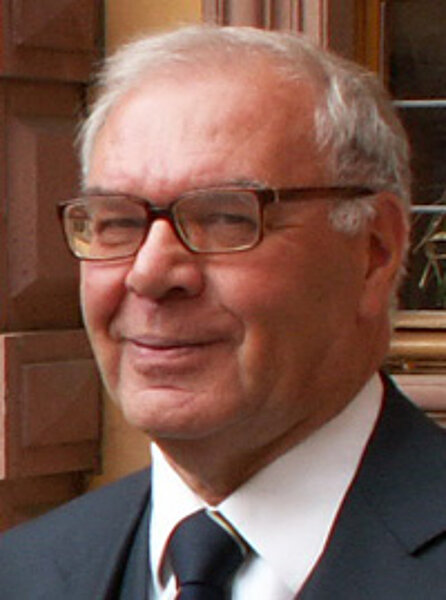
Prof Dr Dieter Salch (2010)
From 1995 to 2001, Dieter Salch held a teaching position at the University of Würzburg. In 1991, he set up his own foundation, the "Dieter Salch Stiftung Pro Universitate", under the umbrella of the Universitätsbund, with the aim of promoting research and teaching, particularly at the Faculty of Law. Dieter Salch is one of the co-founders of the Juristen-Alumni e. V. (since 1991), which served as a model for the establishment of an alumni organisation at the University that includes all Faculties of Law.

Prof Dr Reinhold Würth (2009)
The patron and sponsor of the Adolf Würth Centre was the first recipient of the Röntgen Medal, which is awarded to patrons of the sciences. Reinhold Würth is an entrepreneur from Baden-Württemberg and Chairman of the Supervisory Board of the Würth Group's Family Trusts.